Indra Group's UAS: How our drones help strengthen the sovereignty and autonomy of the Armed Forces
Indra Group has expanded its UAS portfolio with enhanced capabilities from the TARSIS family and the addition of the DRIZZLE interceptor drone
7 reading time
European air defence was designed primarily to counter manned aircraft, cruise missiles and ballistic missiles. This model remained in place for decades. However, the war in Ukraine has brought about a paradigm shift, as the airspace has been transformed profoundly.
Indra Group took part in UNVEX 2026, a professional event that brings together the entire unmanned systems community, covering all applications (mobility, security and commercial) as well as all domains (air, sea and land). In addition to participating in panel discussions, the company also revealed some of the new capabilities of its drone family.
TARSIS Family: ISR Capabilities to Support Military Operations
The TARSIS family is a range of Class I Small tactical Unmanned Aerial Systems (UAS) designed to provide ISR/ISTAR (Intelligence, Surveillance, Target Acquisition and Reconnaissance) capabilities in support of military and security operations.
The systems within the TARSIS family can operate day and night using electro-optical and infrared sensors, delivering critical real-time information that enhances situational awareness and supports decision-making.
Thanks to its modular architecture, the system can be adapted to different operational scenarios through the integration of a range of sensors, communications links and mission-specific payloads.
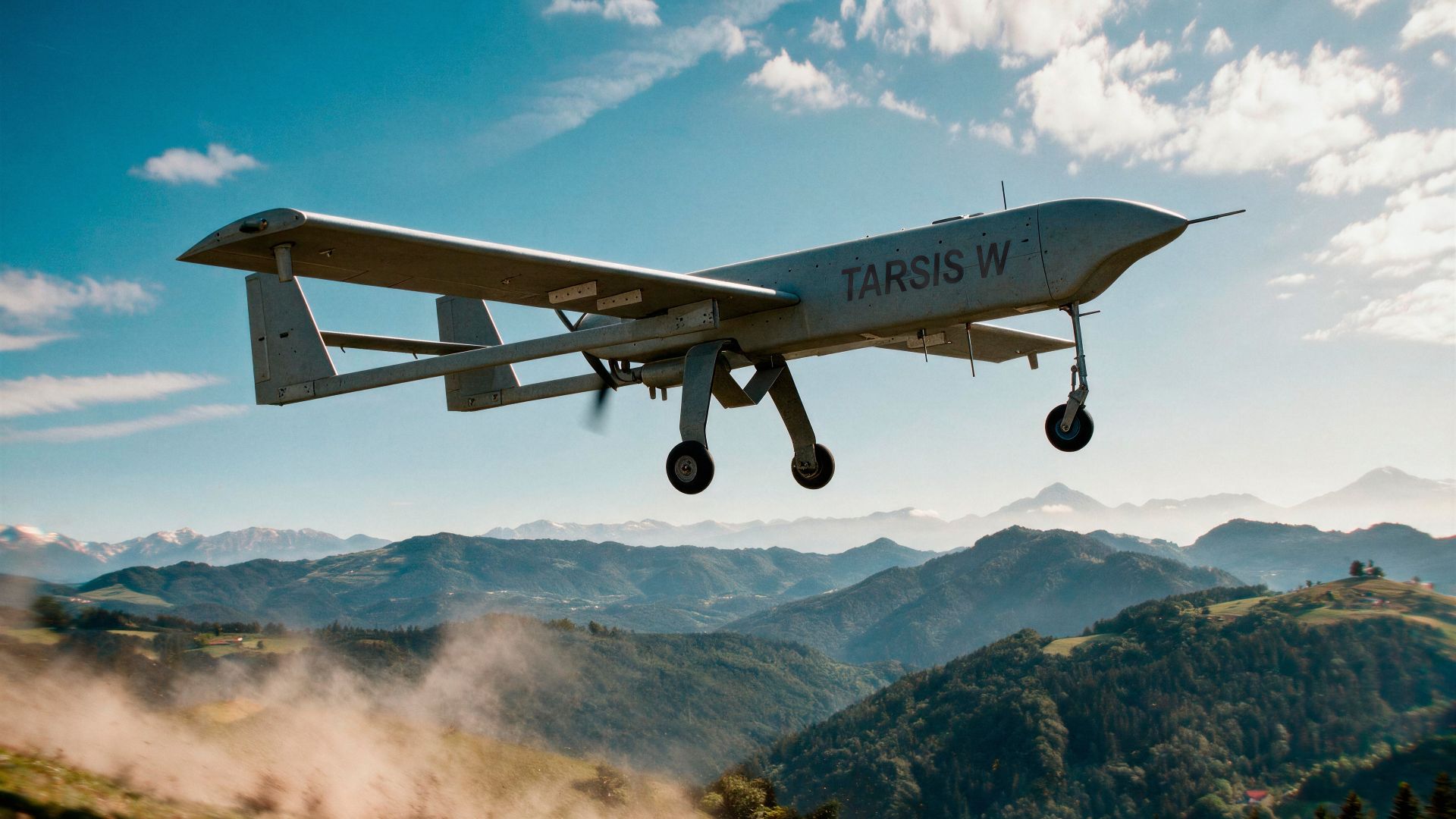
The TARSIS family comprises two versions: TARSIS W and TARSIS VTOL. The TARSIS W is the version optimised for medium and long-endurance missions (with a range of up to 120 km, an altitude of 4,000 m and a cruising speed of 90 km/h). Equipped with Automatic Take-Off and Landing (ATOL) technology and capable of integrating advanced sensors, it is particularly well suited to persistent surveillance, tactical signals intelligence (SIGINT) through RF spectrum monitoring, and fire support missions, with proven effectiveness through direct integration with command and control systems.
The TARSIS family is a range of Class I Small tactical Unmanned Aerial Systems (UAS) designed to provide ISR/ISTAR (Intelligence, Surveillance, Target Acquisition and Reconnaissance) capabilities in support of military and security operations.
Its key features include:
- dimensions: 6.2 m × 3.9 m
- high payload capacity: up to 24 kg
- extended endurance: more than 8 hours
- integration of multiple options: satellite backup link, emergency parachute recovery system and kinetic effectors
- integration of advanced dual EO (electro-optical) and IR (infrared) stabilised surveillance sensors, featuring automatic detection, video tracking and geotracking, as well as night-time operational capability
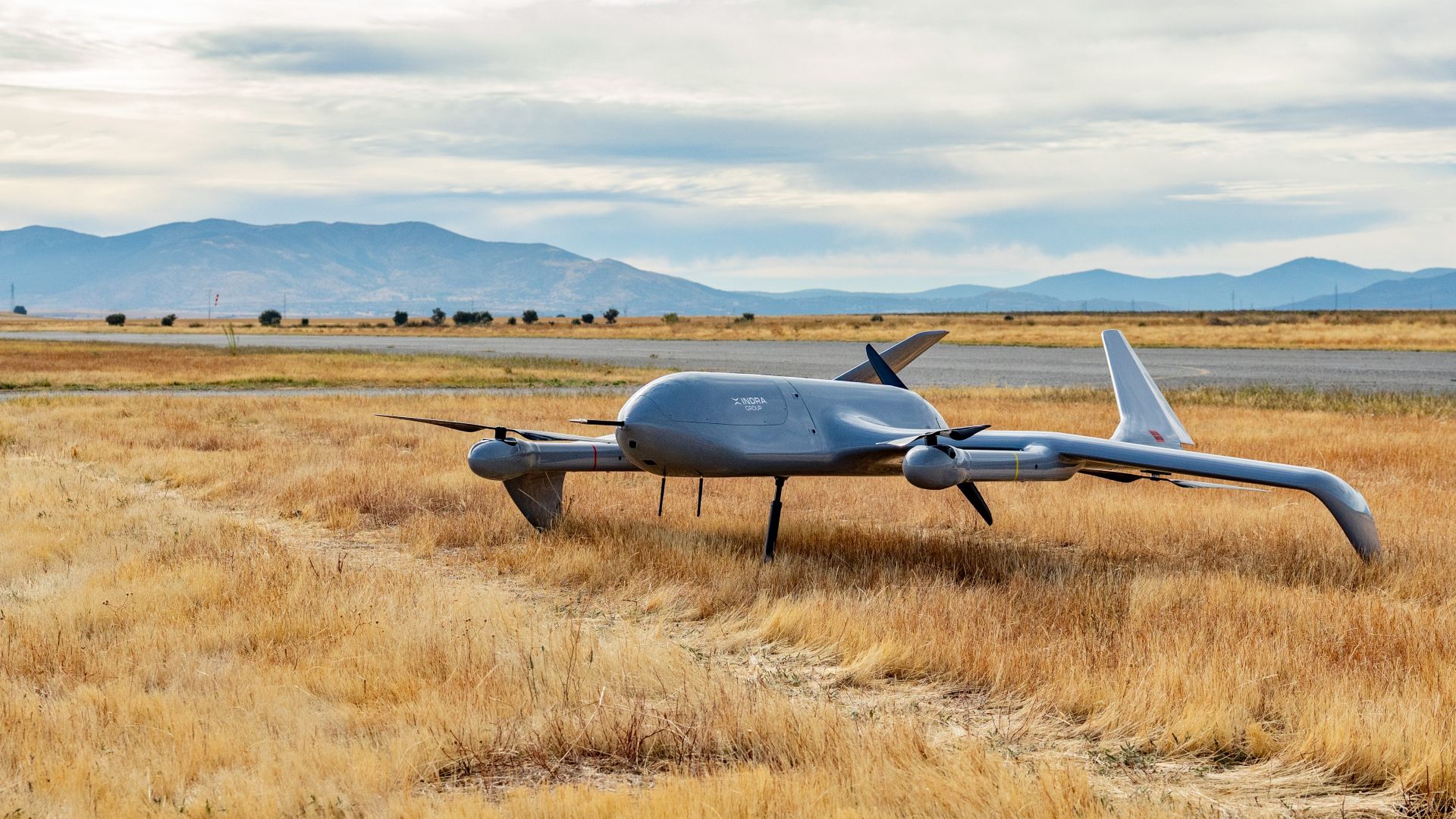
The TARSIS VTOL, meanwhile, combines the ISR/ISTAR capabilities of the TARSIS family with the operational flexibility of vertical take-off and landing.
Developed and manufactured in Spain, this system is designed to operate from confined sites and enables surveillance and reconnaissance capabilities to be deployed in environments where runways or launch and recovery systems are unavailable.
Its main features include:
- dimensions: 5.88 m × 4.5 m
- maximum payload: 20 kg
- endurance: 11.5 hours
- cruising speed: 105 km/h
- onboard computing (AI recognition)
- take-off and landing on moving platforms (including small vessels)
- robust navigation in GNSS-denied environments (Global Navigation Satellite System)
Indra Group has also unveiled new capabilities for its TARSIS drone family in both its armed conventional take-off version (W) and VTOL (Vertical Take-Off and Landing) version.
DRIZZLE Family: A New Generation of Kinetic Effectors
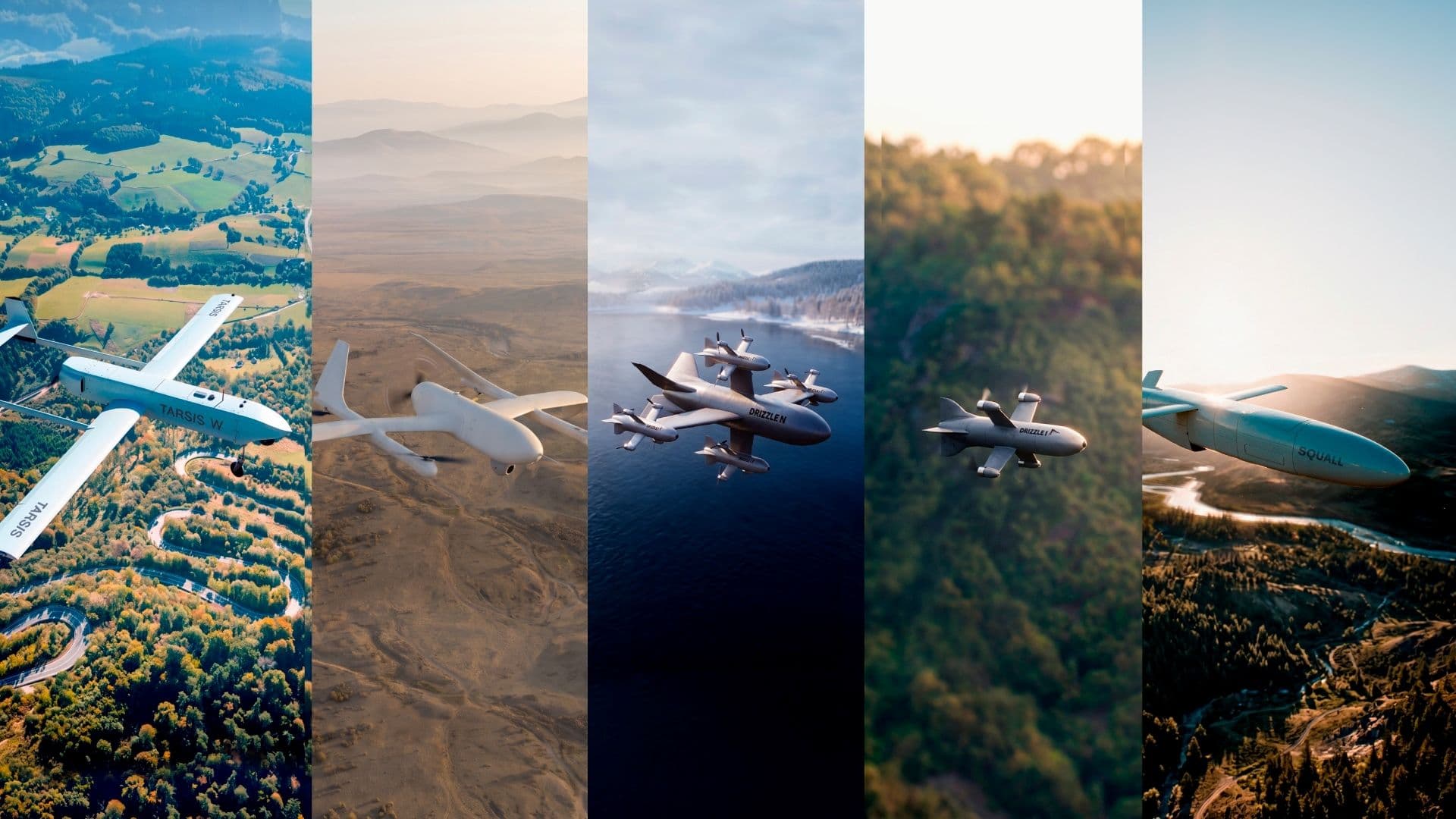
Indra Group also unveiled the DRIZZLE family, a new generation of drone-based kinetic effectors designed to respond to current aerial threats through distributed, scalable and cost-effective architectures.
Its design combines C-UAS interception capabilities, point defence and precision strike functions, enabling the protection of critical infrastructure, deployed forces and strategic targets against individual unmanned threats or coordinated swarms.
The DRIZZLE family integrates a mothership platform and interceptor drones to extend operational range, reduce response times and enhance effectiveness against aerial threats.
DRIZZLE Interceptor: Ground-to-Air and Air-to-Air C-UAS Interceptor
This high-performance interceptor is designed to neutralise hostile aerial systems operating individually or as part of coordinated swarms.
Compact in size and weight, it can reach speeds exceeding 400 km/h thanks to its electric propulsion system and has an approximate range of 80 kilometres, which can be extended to 130 kilometres with support from the mothership drone.
Its advanced onboard processing capability enables it to analyse in real time the information gathered by electro-optical and infrared sensors that guide it during the terminal attack phase. Indra Group is also working to equip the system with radar in future development phases, further enhancing its detection capability.
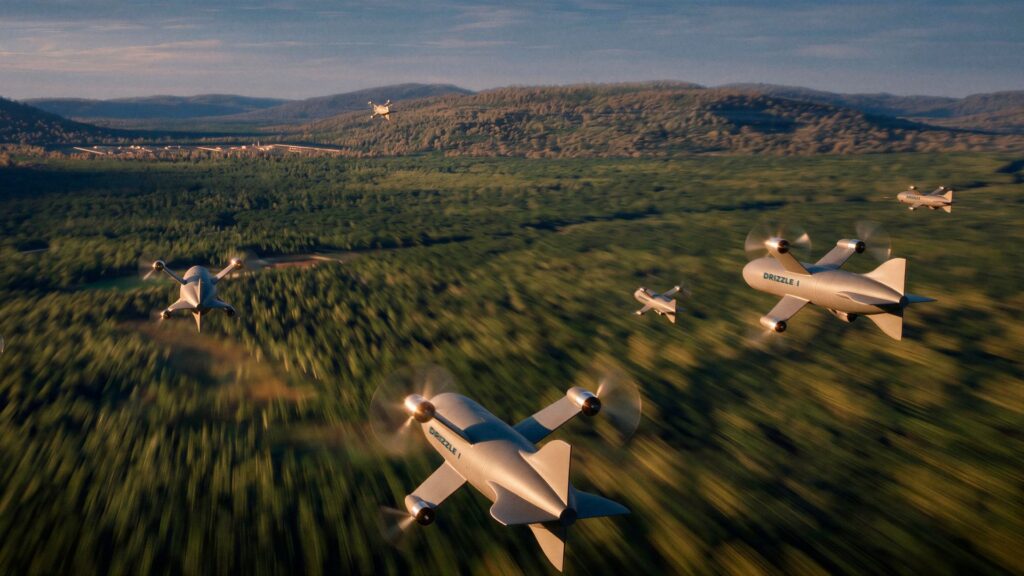
The DRIZZLE Interceptor can be integrated into counter-drone (C-UAS) systems as a hard-kill effector. It can also operate in ground-to-air configurations, providing self-protection capabilities for land vehicles through launch from ground-based platforms, or in air-to-air missions from helicopters when deployed from the mothership platform, thereby optimising response times and operational reach.
The system has been conceived as a low-cost One-Way Effector, designed to be expendable and to provide allied armed forces with a competitive solution in terms of scalability and effectiveness against low-cost drone attacks. It is also a key component within layered air defence architectures for the protection of critical infrastructure, deployed forces and strategic assets.
DRIZZLE Mothership: Deployment and Coordination Platform for Effectors
To extend operational reach using expendable assets, Indra Group has also developed the DRIZZLE Mothership, capable of carrying several smaller interceptors.
This platform can fly at 30,000 feet during the first 80 kilometres of a mission before releasing interceptors in the final phase, enabling them to cover an additional 50 kilometres and increasing the total operational range to approximately 130 kilometres.
These mothership drones can also operate in swarms, releasing a fine “drizzle” of interceptors capable of saturating an adversary’s defences while also acting as attack vectors after completing their primary mission.
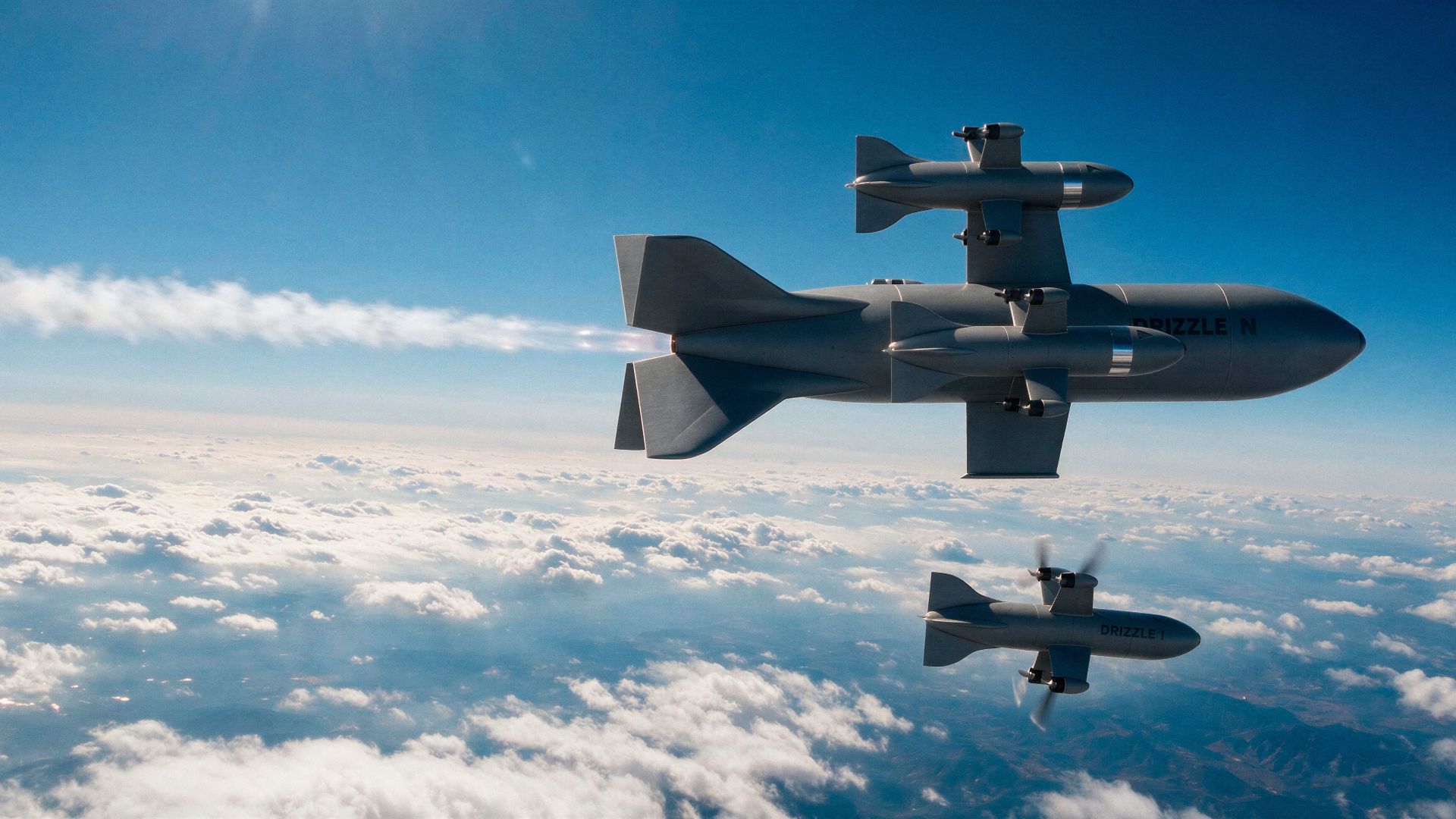
Its reconfigurable dual-use architecture also allows it to operate as an autonomous strike platform, carrying payloads of up to 25 kg for guided munition missions or as a loitering munition (without interceptors) against high-value ground targets.
SQUALL: A new low cost missile
Indra Group has also recently unveiled SQUALL, a new low-cost, long-range subsonic cruise missile (Mach 0.8) designed for mass attacks against strategic targets, such as command and control centres or military infrastructure located hundreds of kilometres away.
Thanks to its low-altitude flight profile, it can evade enemy radar detection and operate covertly. This capability is complemented by highly accurate target engagement, supported by guidance and navigation systems designed to withstand jamming and spoofing attempts.
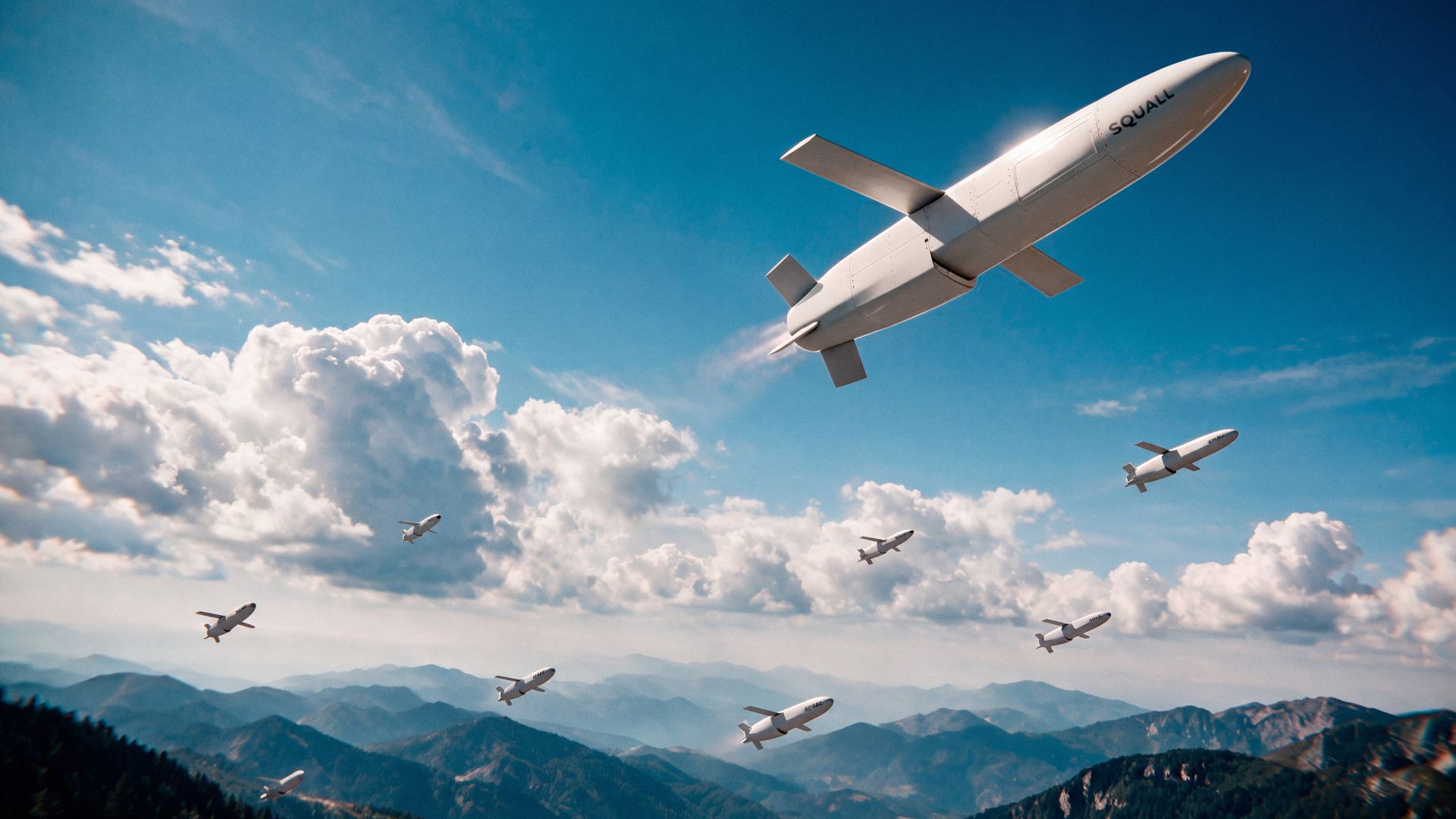
Because SQUALL is significantly less expensive than conventional missiles, it can be employed both in precision strikes involving a limited number of units and in mass attacks intended to saturate enemy defences.
Furthermore, its design is supported by a reliable and resilient European supply chain based on sovereign, controlled components and free from ITAR restrictions (International Traffic in Arms Regulations), ensuring the ability to scale production during critical periods when international supply chains may be disrupted and access to key materials becomes more difficult.
C-UAS: Indra Group counter drone systems
In addition to the UAS solutions, Indra Group’s portfolio includes C-UAS (Counter-Unmanned Aerial Systems) solutions. Developed to detect, identify and neutralise unauthorised drone threats in highly critical environments, Indra Group’s counter-drone system has been conceived as a comprehensive, modular and scalable solution adaptable to various operational environments.
The system can be deployed in fixed, semi-static and mobile configurations on different types of land vehicles, as well as integrated across multiple land and naval platforms.
Indra Group’s counter-drone system has been tested in highly demanding real-world scenarios and has been used by the Armed Forces and State Security Forces to protect airspace during major international events and conventions, where unauthorised drones pose a direct security risk.
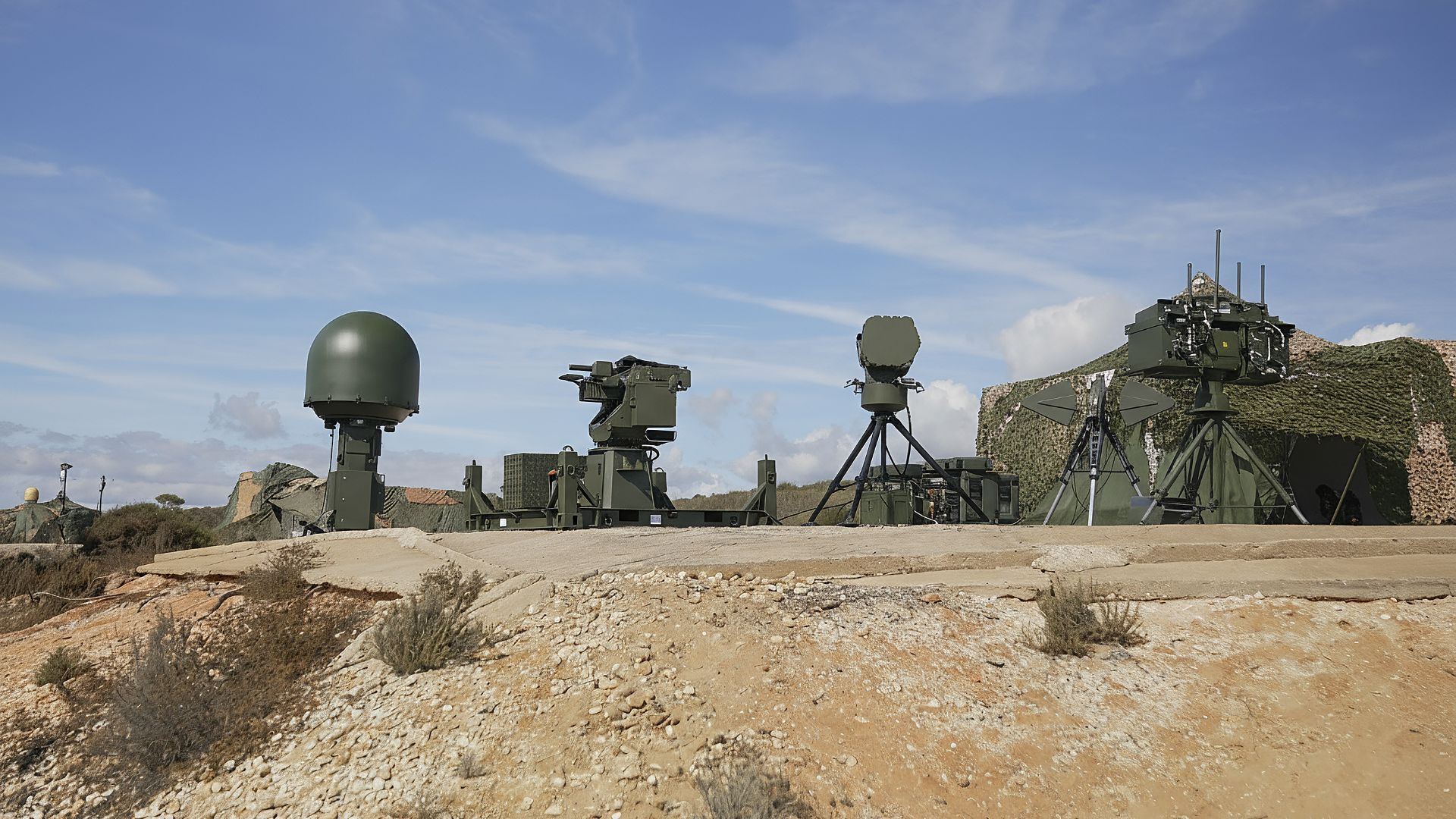
The system has also participated in NATO interoperability exercises such as TIE23 and TIE24, demonstrating its ability to integrate with 27 sensors and effectors from different European manufacturers, operate under the NATO C-UAS AEDP-4869 standard (formerly SAPIENT), and be used effectively by operators with no previous experience thanks to its high level of usability.
Indra Group: A benchmark in the development of UAS-solutions in Spain
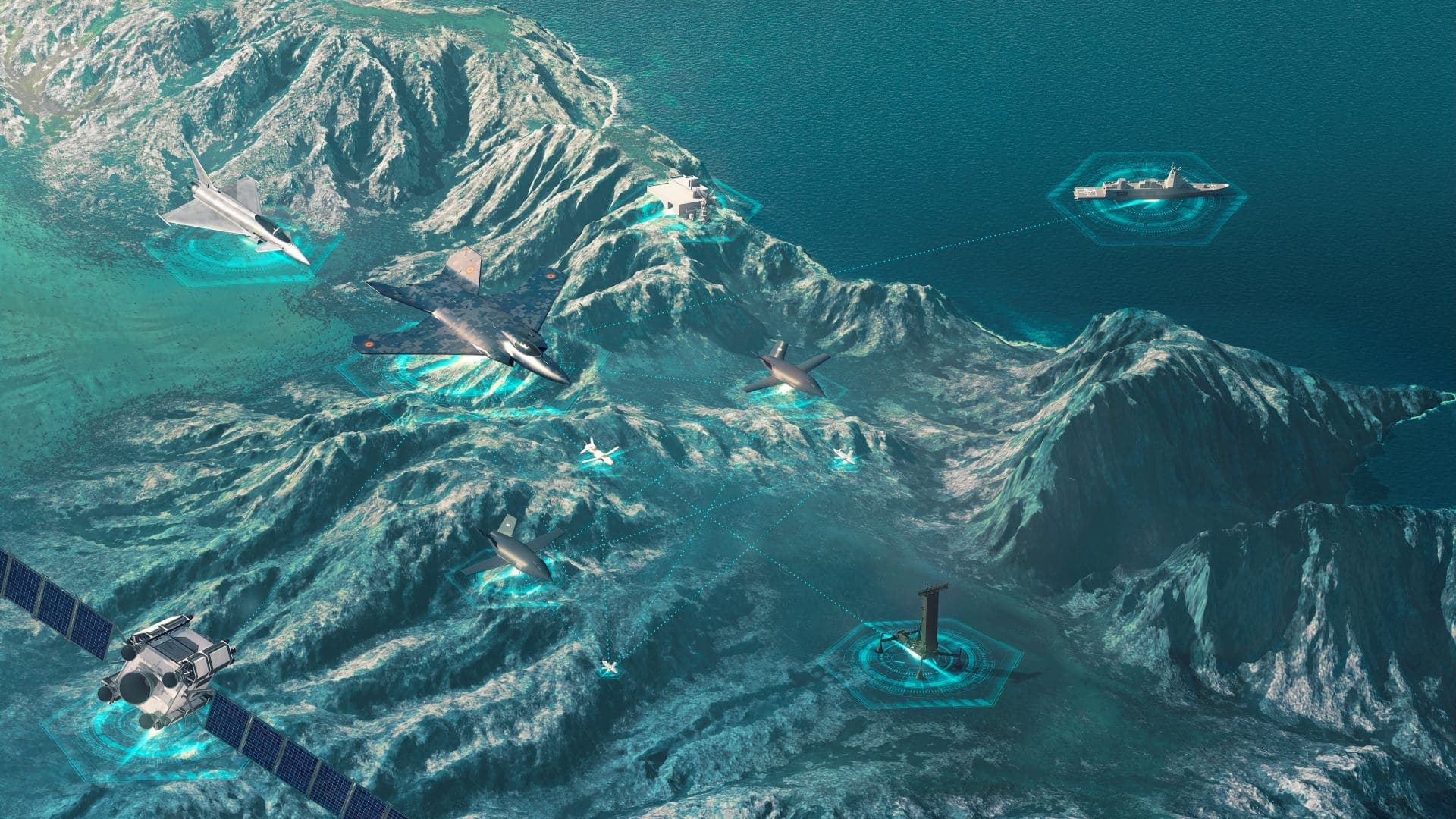
Operational environments are becoming increasingly complex, dynamic and contested, requiring solutions that ensure interoperability and collaboration between different assets, operational superiority and mission effectiveness. As a leading developer of drones and counter-drone systems in Spain, Indra Group helps guarantee the sovereignty and autonomy of the Armed Forces through solutions that extend and enhance their traditional capabilities.
Indra Group has also recently unveiled SQUALL, a new low-cost, long-range (up to 500 km) subsonic cruise missile (Mach 0.8) designed to conduct mass strikes against strategic targets, such as command and control centres and military infrastructure, located hundreds of kilometres away